
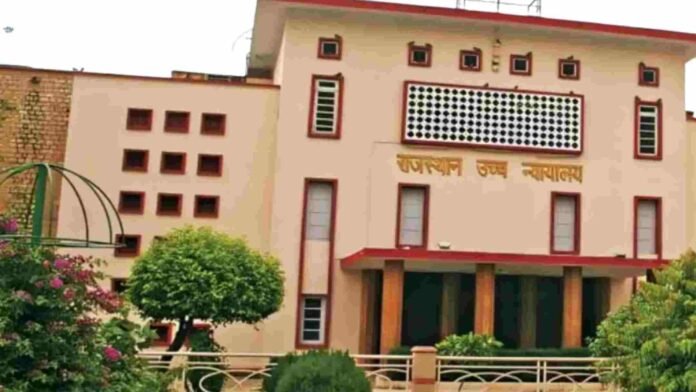
The Rajasthan High Court has granted interim relief to a foreign company in a significant GST dispute involving an ex parte demand exceeding Rs. 1.19 crore along with interest and penalty, arising from alleged wrongful availment of Input Tax Credit (ITC) under Section 16(4) of the Central Goods and Services Tax (CGST) Act, 2017.
The Bench OF Acting Chief Justice Sanjeev Prakash Sharma and Justice Bipin Gupta passed the interim order while hearing a writ petition filed by Eptisa Servicios De Ingenieria SL challenging proceedings initiated under Section 73 of the CGST Act.
The matter assumes importance as it raises broader issues concerning procedural fairness in GST adjudication, validity of service of notices through the GST portal, and the maintainability of writ petitions where statutory appellate remedies allegedly become ineffective due to absence of proper communication of adjudication orders.
According to the petitioner, its GST registration had already been cancelled on 18 December 2020 with “Nil Demand”. However, despite closure of the registration proceedings, fresh proceedings under Section 73 of the CGST Act were allegedly initiated in 2023 for denial of ITC.
The petitioner contended that the Show Cause Notice (SCN) was merely uploaded on the GST portal and was never effectively communicated through any proper mode of service as contemplated under Section 169 of the CGST Act. It was argued that by the time the company became aware of the proceedings, the adjudicating authority had already passed the Order-in-Original (OIO) ex parte.
One of the central allegations before the High Court related to inconsistencies in the GST portal itself. The petitioner pointed out that the show cause notice was reflected under one case ID ending with “5230”, whereas the DRC-07 demand order dated 31 December 2023 appeared under a completely different case ID ending with “3102”. The petitioner further submitted that the original SCN continued to show the status “pending for order” on the portal even after issuance of the demand order.
The writ petition also highlighted that the company had filed a reply in 2024, but despite submission of the response, neither any personal hearing was granted nor was any communication regarding passing of the adjudication order ever served upon the petitioner. The existence of the order allegedly came to light only after coercive bank recovery proceedings were initiated in 2026.
The challenge before the High Court was based on multiple grounds, including violation of principles of natural justice, improper service and communication under Section 169 of the CGST Act, and denial of statutory opportunity of hearing. The petitioner also relied upon Section 16(5) of the CGST Act, which extended the timeline for availment of ITC relating to FY 2017–18, contending that the proceedings failed to consider the benefit of the extended limitation period.
The case additionally brings into focus a recurring controversy under GST administration regarding whether mere uploading of notices or orders on the GST portal constitutes valid service in situations where taxpayers are unable to effectively access or track proceedings, particularly after cancellation of registration or where portal discrepancies exist.
After considering the submissions, the Rajasthan High Court issued notice to the respondents and treated service as complete after appearance by the counsels representing the Union of India and State authorities.
Importantly, the Court granted interim protection to the petitioner by staying the operation of the impugned demand. The Bench ordered: “In the meanwhile, the demand shall remain stayed.”
At the same time, the Court clarified that the State GST authorities would remain free to seek vacation of the interim relief after filing their reply in the matter.
The matter has now been listed for further hearing on 23 July 2026.
Case Details
Case Title: Eptisa Servicios De Ingenieria SL. Versus UOI
Case No.: D.B. Civil Writ Petition No. 8012/2026
Date: 06/05/2026
Counsel For Petitioner: Nikhil Gupta along with Rohan Chatter
Counsel For Respondent: Mahi Yadav, AAG
Read More: JURISHOUR | TAX LAW DAILY BULLETIN : 11 May, 2026

