
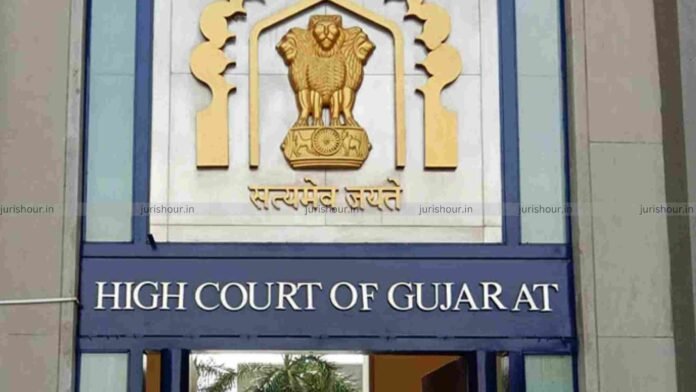
The Gujarat High Court has upheld the constitutional validity of section 16(2)(c) of the CGST Act, 2017 and held that denial of credit for supplier’s default is not unconstitutional.
The bench of Justice A.S. Supehia and Justice Pranav Trivedi has observed that denial of ITC does not amount to double taxation. Instead, ITC is contingent upon actual tax payment, and where tax is not deposited, credit cannot be claimed as a matter of right.
At the heart of the dispute was whether a purchasing dealer should be denied ITC merely because the supplier failed to deposit the tax collected. Petitioners contended that once they fulfilled conditions such as possession of invoice, receipt of goods/services, and reflection in GSTR-2A/2B, denial of ITC due to supplier non-payment was arbitrary and violative of Articles 14, 19(1)(g), and 265 of the Constitution.
They further argued that such denial results in double taxation and imposes an impossible burden on purchasers to verify whether the supplier has actually paid tax—something not accessible under the GST system.
Rejecting these arguments, the High Court held that ITC is not a vested or fundamental right but a statutory benefit subject to strict conditions. The Court emphasized that Section 16(2)(c) clearly mandates that ITC is available only when tax has been actually paid to the Government, and this condition is integral to the GST framework.
The Court noted that the GST system is designed as a self-policing mechanism, where compliance across the supply chain ensures seamless credit flow. Allowing ITC without actual tax payment would disrupt fiscal balance, particularly in inter-State transactions under the IGST mechanism.
A key aspect of the judgment is the Court’s refusal to apply precedents from the VAT regime, including the Delhi High Court ruling in On Quest Merchandising India Pvt. Ltd., where similar provisions were read down to protect bona fide purchasers.
The Gujarat High Court held that the GST framework is fundamentally different due to provisions like Sections 41 and 53 of the CGST Act, which govern reversal and re-availment of ITC and inter-State tax settlement. These provisions were absent in the earlier VAT regime, making those precedents inapplicable.
The Court clarified that denial of ITC does not amount to double taxation. Instead, ITC is contingent upon actual tax payment, and where tax is not deposited, credit cannot be claimed as a matter of right.
The Court highlighted that the law provides a remedy—once the supplier pays the tax, the recipient can re-avail the ITC. Thus, the denial is not permanent but conditional.
The Court also underscored Section 155 of the CGST Act, which places the burden of proving eligibility for ITC on the taxpayer. Merely producing invoices or proof of payment to the supplier is insufficient; compliance with all statutory conditions, including actual tax payment, must be demonstrated.
Case Details
Case Title: Maruti Enterprise Versus UOI
Citation: JURISHOUR-1075-HC-2026(GUJ)
Case No.: R/SPECIAL CIVIL APPLICATION NO. 18080 of 2023
Date: 01/05/2026
Counsel For Petitioner: Tushar Hemani, Senior Advocate
Counsel For Respondent: Kamal Trivedi, Advocate General
Read More: Govt Notifies FEMA (Non-Debt Instruments) Amendment Rules, 2026

