
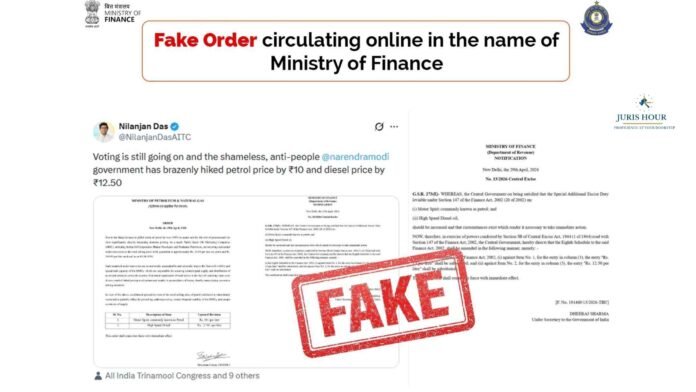
A purported government order claiming a sharp hike in petrol and diesel prices recently went viral on social media, prompting swift clarification from the Ministry of Finance, which categorically termed the document as “fake” and misleading.
The viral document, falsely attributed to the Ministry of Finance, suggested that the Central Government had increased the price of petrol by ₹10 per litre and diesel by ₹12.50 per litre through a notification dated April 29, 2026. The fake order was widely shared across social media platforms, with several users amplifying the claim and attributing it to official government action.
The misinformation gained further traction after being circulated alongside a social media post alleging that the government had “brazenly” increased fuel prices during an ongoing election period. The post included what appeared to be an official notification bearing the emblem of the Government of India and formatting similar to genuine circulars issued by the Department of Revenue.
However, the Ministry of Finance promptly intervened and issued a public clarification, warning citizens that no such notification had been issued. The Ministry categorically stated that the document in circulation was fabricated and urged the public not to fall prey to misinformation.
Officials highlighted that the fake notification misused official formatting and references to statutory provisions, including mentions of the Finance Act, 2002 and excise duty adjustments, in an attempt to lend credibility to the fabricated content. The forged document also falsely cited a notification number and carried a fabricated signature, further indicating deliberate attempts to mislead the public.
Buy Now: 500+ CGST Notifications (2017–2025) | Clickable Index E-Magazine | Hyperlinked Original PDFs
Government sources emphasized that any changes in fuel pricing or excise duties are communicated through official channels, including the Gazette of India and verified government websites. Citizens were advised to rely only on authenticated sources for such sensitive information and to verify claims before sharing them on social media.
The incident underscores the growing challenge of misinformation in the digital age, particularly involving forged government documents that can influence public perception and trigger unwarranted panic or political reactions. Authorities have indicated that necessary steps may be taken to trace the origin of the fake document and curb further dissemination.
The Ministry reiterated its appeal to the public to remain vigilant and report suspicious or unverified content, especially when it pertains to government policies or financial decisions.

