
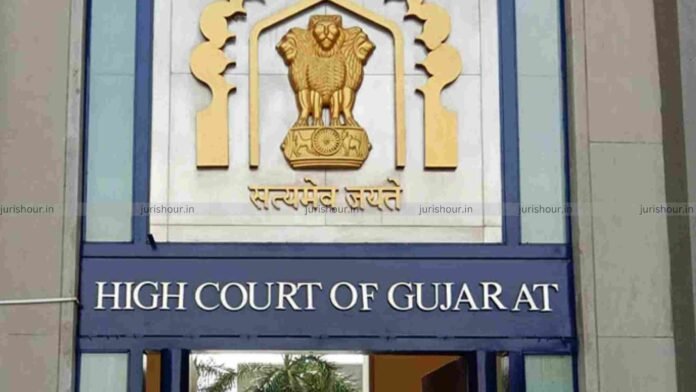
The Gujarat High Court bench of Justice A.S. Supehia and Justice Pranav Trivedi has reserved its judgment in a significant batch of petitions challenging the constitutional validity of Section 16(2)(c) of the Central Goods and Services Tax Act, 2017.
Section 16(2)(c) of the Central Goods and Services Tax Act, 2017 mandates that input tax credit (ITC) can be availed by a purchaser only if the supplier has actually paid the tax to the government, a condition that has sparked widespread litigation across the country.
During the course of arguments, Senior Advocate Tushar Himani led the submissions on behalf of the petitioners, followed by Advocate Uchit Seth. The petitioners primarily invoked the doctrine of impossibility, contending that a purchasing dealer cannot be expected to ensure compliance by the supplier, particularly with respect to tax payment obligations. It was argued that such a condition imposes an unreasonable burden on bona fide purchasers who have no control over the conduct of their suppliers.
The petitioners further contended that Section 16(2)(c) violates Article 14 of the Constitution by treating unequals as equals. According to the submissions, the provision fails to distinguish between genuine purchasers acting in good faith and those who may have colluded with defaulting suppliers, thereby leading to arbitrary consequences.
Additional submissions placed before the Court emphasized that even under pre-GST indirect tax regimes, the Supreme Court of India has consistently held that the compliance burden of one party cannot be shifted onto another. It was argued that statutory obligations of a seller cannot be imposed upon a buyer, and vice versa, as such an approach would be contrary to settled legal principles.
Reliance was placed on the Supreme Court’s decision in CCE vs. Decent Dyeing Co. (1990), where it was held that the primary liability to pay excise duty rests with the manufacturer. The Court had observed that it would be unreasonable to expect purchasers to verify whether duty had already been discharged, as they lack the means to do so. In that case, the demand arose on the manufacturer of textured yarn due to non-payment of duty by the supplier of base yarn, reinforcing the principle that liability cannot be shifted downstream.
Further reliance was placed on State of Madras vs. Radio and Electricals Ltd. (1966), decided in the context of the Central Sales Tax regime. The Supreme Court had held that a selling dealer cannot be penalized for any fraudulent declaration or misuse of goods by the purchasing dealer, noting that the seller has no control over the purchaser and must rely on representations made to him. The judgment underscored that statutory frameworks do not envisage penal consequences for one party based on the conduct of another.
In addition, the petitioners cited the ruling in Elphinstone Spinning and Weaving Mills Co. Ltd. (1971), to argue that the expression “paid” in Section 16(2)(c) should be interpreted as “ought to have been paid.” This interpretation, it was submitted, would align the provision with practical realities and prevent undue hardship to bona fide taxpayers.
The matter assumes considerable importance for businesses across India, as the outcome will determine the extent to which purchasers can be denied ITC due to supplier defaults. With the Court having reserved its verdict, stakeholders now await clarity on whether Section 16(2)(c) will withstand constitutional scrutiny or be read down to balance revenue interests with taxpayer rights.
Case Details
Case Title: Maruti Enterprise Versus UOI
Case No.: R/Special Civil Application No. 18080 Of 2023
Date: 21/04/2026
Counsel For Petitioner: Tushar Hemani, Senior Advocate
Counsel For Respondent: Kamal Trivedi, Advocate General
Read More: Monetary Limits for Departmental Appeals Before GSTAT

