
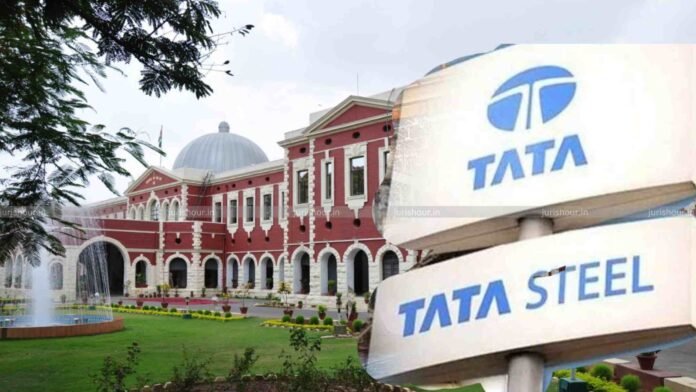
The Jharkhand High Court dismissed a writ petition filed by Tata Steel Limited challenging an Order-in-Original passed under Section 74 of the CGST Act, 2017 and held that the case did not fall within the exceptional circumstances warranting bypass of the statutory appellate mechanism.
The bench of Chief Justice M. S. Sonak and Justice Rajesh Shankar, reiterated the well-settled principle that writ jurisdiction should not be invoked when an effective alternative remedy exists, except in exceptional cases. Reliance was placed on the landmark judgment in Whirlpool Corporation v. Registrar of Trade Marks, which carves out limited exceptions such as complete lack of jurisdiction and violation of natural justice.
The petitioner challenged the Order-in-Original dated 26 December 2025, issued under Section 74 of the CGST Act, which deals with cases involving alleged fraud, suppression, or willful misstatement. Notably, the petitioner acknowledged the availability of an alternative appellate remedy but urged the Court to exercise its writ jurisdiction under Article 226 of the Constitution.
Buy Now: GST Monthly E-Compilation : March 2026
The challenge was primarily built on two grounds: lack of jurisdiction for invoking Section 74, contending that essential ingredients such as fraud or suppression were absent and alleged violation of principles of natural justice, particularly due to reliance on an audit report and procedural irregularities in reviving proceedings from the call book.
However, the Court found that neither exception was satisfied in the present case.
The Court held that the show-cause notice and subsequent order could not be termed as “wholly without jurisdiction.” It observed that the proper officer had formed a prima facie satisfaction regarding wrongful availment of Input Tax Credit involving elements of fraud or suppression. Whether such findings were correct or not was a matter of merit, suitable for adjudication in appeal, not writ proceedings.
The Bench emphasized that disputing factual findings or sufficiency of evidence does not elevate a matter into a jurisdictional error warranting interference under Article 226.
On the issue of natural justice, the Court noted that a show-cause notice was duly issued. The petitioner was granted an opportunity to respond. The impugned order considered the submissions made
Thus, it rejected the contention of any “patent” violation of natural justice. The Court clarified that alleged inadequacies in reasoning or appreciation of submissions cannot be equated with denial of fair hearing.
Citing precedents such as State of Maharashtra v. Greatship (India) Limited and Thansingh Nathmal v. Superintendent of Taxes, the Court reiterated that writ jurisdiction is not meant to circumvent statutory procedures, act as an appellate forum, and re-evaluate factual findings
The Court also cautioned against the growing tendency to invoke writ jurisdiction merely to obtain interim relief and delay statutory proceedings.
The Court granted liberty to the petitioner to file an appeal within four weeks and directed that if such an appeal is filed within the stipulated time, the appellate authority shall decide the matter on merits without rejecting it on limitation grounds, considering the petitioner had been bona fide pursuing the writ remedy.
Case Details
Case Title: M/s. Tata Steel Limited Versus Union of India
Citation: JURISHOUR-956-HC-2026(JHAR)
Case No.: W.P. (T) No. 2485 of 2026
Date: 23/04/2026
Counsel For Petitioner: Kavin Gulati, Sr. Advocate
Counsel For Respondent: Amit Kumar, Sr. S.C.
Read More: Gujarat High Court Grants Bail to Advocate in GST Fake ITC Case

