
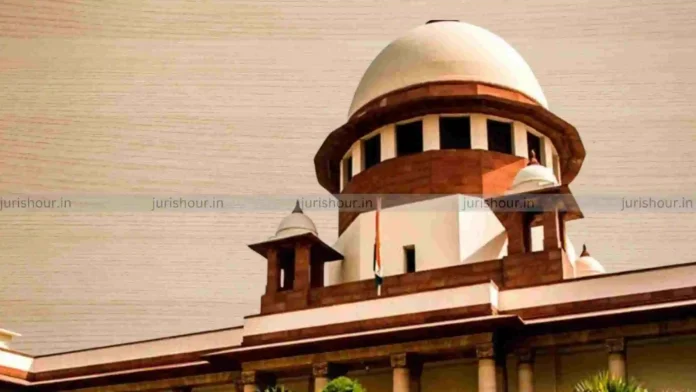
The Supreme Court of India has set aside a Gujarat High Court ruling that had interfered with a tender award for operation and maintenance of a power plant, emphasizing that courts must exercise restraint in contractual disputes, particularly where the differences between bidders are marginal.
A bench comprising Justice Pamidighantam Sri Narasimha and Justice Alok Aradhe overturned the High Court’s decision, holding that such interference was unwarranted. The Court stressed that judicial review in tender matters is limited and does not extend to re-evaluating bids or substituting the decision of the tendering authority unless there is clear evidence of arbitrariness, mala fide intent, or perversity.
The case arose from a tender floated in January 2025 by GSPC Pipavav Power Company Limited (GPPC) for the operation and maintenance of its 702.86 MW gas-based combined cycle power plant. The tender followed the Quality and Cost Based Selection (QCBS) method, assigning 70% weightage to technical evaluation and 30% to financial bids.
Among the competing bidders were STEAG Energy Services (India) Pvt. Ltd. (appellant) and another bidder who later challenged the process before the Gujarat High Court. After evaluation, STEAG was declared the successful bidder and was issued a Letter of Award (LOA) on June 9, 2025, followed by execution of the contract on July 1, 2025.
However, the unsuccessful bidder approached the High Court alleging arbitrariness in the evaluation process and sought cancellation of the LOA. During the proceedings, the High Court directed a re-evaluation of technical scores by the consultant. This resulted in a reduction of STEAG’s technical marks, bringing both bidders to an equal technical score of 93.
The High Court then compared the financial bids and found a marginal difference—less than 0.003 points in the final score—favoring the petitioner. On this basis, it quashed the LOA granted to STEAG and directed that the contract be awarded to the petitioner instead.
“A mere disagreement with the decision-making process is no ground for interference,” the Court observed, reiterating principles laid down in precedents such as Afcons Infrastructure Ltd. v. Nagpur Metro Rail Corporation Ltd..
The Court noted that the difference between the competing bidders was minuscule, and did not justify judicial interference.
It emphasized that the final decision in tender matters rests with the owner, who must be given “fair play in the joints.”
Courts should avoid using a “magnifying glass” to identify minor discrepancies in complex technical evaluations.
The High Court failed to consider the practical needs of the project owner, including timely execution and operational continuity.
The Supreme Court highlighted that the tender process had already advanced significantly, with the contractor mobilizing resources and commencing operations. Interfering at such a stage could disrupt public projects and lead to financial and administrative setbacks.
The Supreme Court upheld the validity of the LOA dated June 9, 2025, and the subsequent contract executed in favor of STEAG. It allowed the appeal and restored the original tender award, permitting GPPC to proceed with the contract without further hindrance.
However, the Court declined to interfere with certain findings of the High Court regarding specific technical evaluation criteria, dismissing a connected appeal on that limited issue.
Case Details
Case Title: M/S. Steag Energy Services (India) Pvt. Ltd. Versus Gspc Pipavav Power Company Ltd. (Gppc) & Ors.
Citation: JURISHOUR-515-SC-2026
Case No.: SLP (C) NO(S). 30209-30210 OF 2025
Date: 25/03/2026
Read More: Supreme Court Quashes Dowry Harassment Case Against In-Laws Citing Delay and Lack of Evidence

