
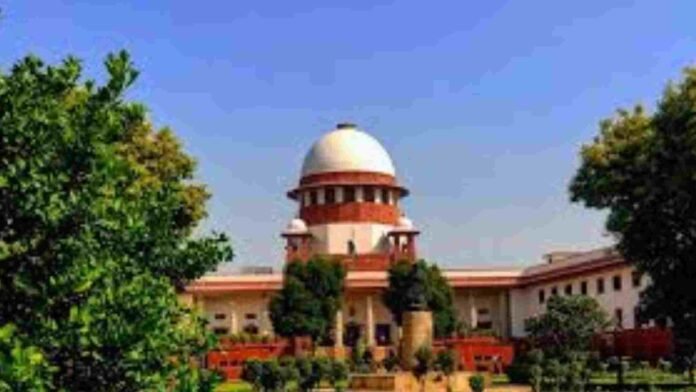
The Supreme Court has ruled that a company whose coal supply was suspended is not entitled to monetary compensation of over ₹106 crore, clarifying that earlier court orders only permitted supply of coal at the “current price” under prevailing policy for the suspended period.
The bench of Justice Pankaj Mithal and Justice S. V. N. Bhatti has observed that both parties were attempting to interpret earlier judicial orders in a manner favourable to their own positions. The bench emphasized that the earlier Supreme Court order dated April 9, 2014 clearly modified the High Court’s compensation direction.
The dispute dates back to 2011 when SECL suspended coal supply under a Fuel Supply Agreement (FSA) after allegations that coal allocated for a sponge iron plant had been diverted to a captive power plant. The suspension was challenged before the High Court, which quashed the decision and directed restoration of coal supply.
In appellate proceedings, the High Court also directed that the affected company be compensated for the period between October 2011 and December 2012 for the higher cost of coal purchased through e-auction. However, when the matter reached the Supreme Court in 2014, the Court modified that direction. Instead of payment of compensation, it allowed the authorities to supply coal for the suspended period at the current rate under a fresh fuel supply arrangement.
After the Supreme Court dismissed a challenge to the High Court’s later orders in August 2025, the Union government and SECL filed a compliance affidavit stating they were ready to resume supply and had asked the company to execute a memorandum of understanding for coal supply.
The respondent company, however, sought direct payment of ₹106.59 crore as compensation, representing the difference between the price paid for coal in e-auction and the price under the earlier FSA, along with interest. It also argued that receiving coal now would be impractical because it already had adequate supply arrangements and existing fuel supply agreements.
The Supreme Court observed that the correct interpretation of the earlier rulings is that the authorities must supply coal for the suspended period at the “current price” in accordance with the prevailing policy, and that the orders cannot be construed as a direction to pay monetary compensation.
While rejecting the compensation claim, the Court addressed the ambiguity surrounding the meaning of “current price”. It granted the company the option to choose the applicable policy date between April 9, 2014 (the date of the Supreme Court’s earlier order), or May 17, 2019 (the date of the High Court judgment).
The authorities must then execute a fresh Fuel Supply Agreement with the company for the suspended period within two weeks of the company communicating its choice, and the arrangement must be completed within four weeks. The Court also clarified that the coal supply should be under normal linkage rather than tapering linkage.
Case Details
Case Title: UOI Versus Prakash Industries Limited
Citation: JURISHOUR-419-SC-2026
Case No.: MISCELLANEOUS APPLICATION NOS. 1806-1807 OF 2025
Date: 17/03/2026
Read More: Dying Declaration Can Be Relied Upon If Certified by Doctor: Supreme Court

