
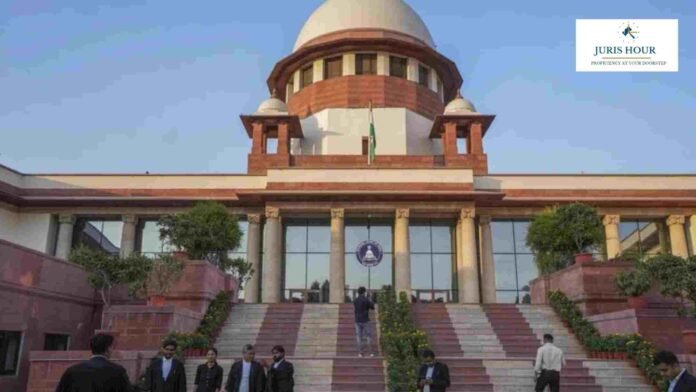
The Supreme Court has held that the seniority of directly recruited employees must be counted from the date they first join service, even if they are undergoing training, and not from the date their probation begins.
The bench of Justice Rajesh Bindal and Justice Vijay Bishnoi while hearing multiple appeals relating to the inter-se seniority between direct recruits and internally selected candidates for the post of Assistant Engineer (Electrical).
The controversy arose from recruitment to the post of Assistant Engineer (Electrical) in the Tamil Nadu Electricity Board through two different channels: Direct recruitment, and Internal selection from existing employees.
The Board conducted direct recruitment in December 2000 and March 2001, appointing approximately 300 Assistant Engineers who initially joined as AE (Trainees). They were required to undergo training before being placed on probation.
Meanwhile, internal candidates were promoted to the same post later, with the selection list issued on 6 May 2002.
Subsequently, disputes arose regarding which group should rank higher in the seniority list. Internal selectees argued that the direct recruits’ seniority should begin only when their probation started after training, whereas direct recruits claimed seniority from the date they initially joined service.
The issue became more complex after the Board issued Board Proceeding (BP) No. 9 dated 23 April 2002, which reduced the training period for direct recruits from two years to three months. Internal candidates challenged this change, contending that it unfairly advanced the seniority position of direct recruits.
The Division Bench of the Madras High Court had ruled in favour of the internal candidates. It held that direct recruits could not be treated as regular members of the cadre during the training period and that their probation would begin only after the reduced training period under the 2002 Board Proceeding.
As a result, the High Court directed that all candidates be treated as appointed in 2002, and ordered the redrawing of the seniority list accordingly.
This judgment was challenged before the Supreme Court by the Tamil Nadu Electricity Board as well as the direct recruits.
The Supreme Court closely examined the Tamil Nadu Electricity Board Service Regulations, 1967, particularly provisions relating to “duty,” “appointment,” and “seniority.”
The Court noted that Regulation 10(9) defines “duty” to include not only performing duties of a post but also undergoing probation or training prescribed for the post. Regulation 87 states that a person is considered appointed to a service when he either begins performing duties or commences training or probation.
Based on these provisions, the Court concluded that training forms part of service and cannot be excluded while calculating seniority.
The bench clarified that Regulation 97, which deals with seniority, does not state that seniority begins only after probation. Instead, seniority is primarily determined by the rank obtained in the approved list of candidates prepared during recruitment.
Rejecting the High Court’s reasoning, the Supreme Court emphasised that once a candidate joins service and begins training for the post, he is already considered to be on duty under the service regulations.
The Court observed that excluding the training period from seniority would effectively erase the service rendered by direct recruits during that period, which would contradict the regulatory framework governing the Board’s employees.
The bench further clarified that the Board’s administrative decision to reduce the training period through BP No. 9 (2002) had no relevance to determining seniority, since the regulations already treated training as part of duty.
The Supreme Court held that the date of joining service is the relevant date for determining seniority of direct recruits. Training is an integral part of service, and the period spent in training cannot be ignored.
The High Court misinterpreted the service regulations by linking seniority to the commencement of probation. The 2002 Board Proceeding reducing the training period does not affect the determination of seniority.
The Court set aside the judgment of the Madras High Court and allowed the appeals filed by the Board and the direct recruits.
Case Details
Case Title: M. Thanigivelu And Ors. Versus Tamil Nadu Electricity Board And Ors.
Citation: JURISHOUR-335-SC-2026
Case No.: CIVIL APPEAL NO. 862 OF 2026
Date: 11/03/2026
Read More: Creamy Layer Criteria: Salary of PSU Employees Can’t Be Used to Deny OBC-NCL Status: Supreme Court

