
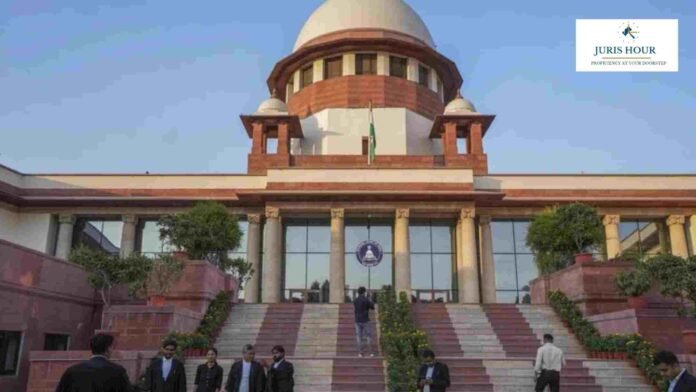
The Supreme Court has held that landowners cannot be held jointly and severally liable for delay compensation where the obligation to construct and deliver flats rests solely with the developer under a Joint Development Agreement (JDA).
The Bench of Justices Pamidighantam Sri Narasimha and Alok Aradhe undertook a detailed examination of the JDA and the GPA and noted that the developer had exclusive responsibility for construction and delivery of flats falling within its share. The developer was authorized to enter into sale agreements, receive consideration, and complete registration formalities. The JDA included indemnity clauses protecting the landowners against liabilities arising from the developer’s acts or omissions in construction.
The dispute stemmed from a Joint Development Agreement executed in February 2012 between landowners and M/s Unishire Homes LLP, the developer. The developer subsequently entered into Memoranda of Sale Agreements with flat purchasers beginning July 2013, promising possession within 36 months.
The possession deadline expired in August 2016, including a six-month grace period that ended in February 2017. However, the project remained incomplete well beyond the stipulated timeline. Aggrieved flat buyers approached the National Consumer Disputes Redressal Commission (NCDRC) in August 2017 alleging deficiency in service and unfair trade practices.
By its order dated October 19, 2023, the NCDRC found the developer guilty of deficiency in service due to a delay exceeding six years. It directed the developer to complete construction and obtain the occupancy certificate; hand over possession within three months; and pay interest at 6% per annum on the amounts deposited by the buyers from the due date of possession until the offer of possession, failing which interest would escalate to 9%.
The Commission initially absolved the landowners of liability, noting that the construction obligation lay exclusively with the developer.
In review proceedings, the Commission briefly held the landowners jointly and severally liable. However, that order was set aside by the Supreme Court in May 2024 on the ground that it had been passed without affording an opportunity of hearing to the landowners. Upon reconsideration, the NCDRC restored its earlier position, holding that landowners were not liable for delay compensation but directing both landowners and the developer to execute sale deeds and transfer title to the purchasers.
The principal issue before the Supreme Court was whether landowners could be held jointly and severally liable for delay compensation on the basis that a General Power of Attorney (GPA) created a principal-agent relationship between them and the developer.
The appellants argued that since the landowners had executed a GPA authorizing the developer to enter into sale agreements and execute conveyances, they were legally responsible for the acts and omissions of the developer.
The Court observed that the delay related to flats forming part of the developer’s share and that there was no allegation that any act or omission of the landowners contributed to the delay.
Rejecting the principal-agent argument, the Court held that the mere execution of a GPA did not make landowners liable for construction-related deficiencies when the contractual scheme clearly placed construction responsibility on the developer.
While absolving the landowners from liability for delay compensation, the Court upheld the NCDRC’s direction requiring both landowners and the developer to execute sale deeds and transfer title in favour of the flat purchasers. The Court clarified that landowners remain jointly responsible for ensuring conveyance of title but not for construction delays.
The Court concluded that the NCDRC had correctly fastened liability for delay compensation solely on the developer. It found no legal basis to impose joint and several liability on landowners who neither undertook construction nor contributed to the delay.
Case Details
Case Title: Sriganesh Chandrasekaran & Others Versus M/S Unishire Homes LLP
Citation: JURISHOUR-69-SC-2026
Case No.: Civil Appeal Nos.10527 – 10528 Of 2024
Date: 20/02/2026

