
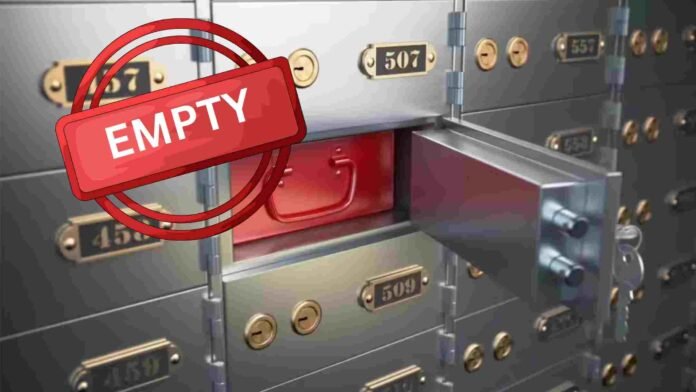
Recent instances of valuables allegedly going missing from bank lockers have reignited concerns about the safety of gold, jewellery and important documents stored in financial institutions. For many Indian households, bank lockers are considered one of the safest places to preserve family wealth. However, disputes over missing contents often expose gaps in awareness regarding the legal framework governing lockers.
The regulatory position today is largely shaped by the revised Safe Deposit Locker and Safe Custody Article Directions, 2021 issued by the Reserve Bank of India (RBI), which were introduced following judicial scrutiny and rising consumer complaints. These directions clarify the nature of the bank–customer relationship, the extent of liability, and the rights of locker holders.
Nature of the Bank–Customer Relationship
A bank does not know what is stored inside a locker. Therefore, the relationship is not treated as a traditional “bailment” of specific goods. However, this does not absolve banks of responsibility. They are required to exercise due diligence and reasonable care in maintaining locker infrastructure, access systems, and overall security.
Banks must ensure proper record-keeping, secure locking mechanisms, surveillance systems and controlled access. The obligation is to maintain the integrity of the locker system, even though the contents remain confidential to the customer.
Bank’s Liability in Case of Loss
Under RBI’s 2021 directions, the bank’s liability for loss of locker contents arising from fire, theft, burglary, robbery, dacoity, building collapse or fraud attributable to the bank is capped at 100 times the annual locker rent.
For instance, if the annual rent is ₹4,000, the maximum compensation would be ₹4,00,000, irrespective of the actual value of jewellery or other valuables stored inside. This statutory cap applies even if the stored items are worth significantly more.
However, compensation is payable only if negligence or deficiency in service on the part of the bank is established. If the loss occurs due to natural disasters such as earthquakes or floods, and there is no attributable negligence by the bank, liability may not arise. Similarly, if the customer’s own actions contribute to the loss, compensation may be denied.
RBI Prohibitions and Restrictions
RBI expressly prohibits the storage of cash in lockers. If cash is kept inside a locker and is subsequently lost, banks are not liable to compensate for such loss.
Customers are also prohibited from storing hazardous, illegal or dangerous materials in lockers. Banks are entitled to take action, including termination of locker agreements, if such violations are discovered.
RBI has also prescribed procedures for inoperative lockers. If a locker remains inoperative for seven years (even if rent is paid) or three years (if rent is unpaid), banks are required to carry out due diligence and attempt to contact the locker holder. Break-open procedures must follow strict documentation and inventory protocols.
Rights of Locker Holders
Locker holders have several rights under RBI’s revised framework.
Customers are entitled to a standardized locker agreement that complies with RBI directions. Banks cannot impose unfair clauses that dilute liability beyond what RBI permits.
Customers have the right to access lockers during working hours, subject to reasonable operational procedures. Banks must maintain CCTV coverage, proper access logs and a dual control system requiring both the customer’s key and the bank’s master key.
Locker holders also have the right to appoint nominees. In the event of death, banks must facilitate access to nominees after completing due verification, without automatically insisting on succession certificates unless circumstances warrant it.
If a locker is to be broken open due to non-payment of rent or loss of keys, prior notice must be issued. The break-open process must be conducted in the presence of authorized officials and an inventory of contents must be prepared.
Customers also retain the right to approach the bank’s grievance redressal mechanism, escalate to the RBI’s Integrated Ombudsman Scheme, and pursue remedies before consumer courts or civil courts if necessary.
Powers of Banks
Banks retain significant operational powers in relation to lockers.
They may refuse locker allotment based on non-compliance with Know Your Customer (KYC) requirements, risk assessment considerations or regulatory concerns.
Banks are permitted to break open lockers after following due process in cases of unpaid rent, lost keys, or pursuant to court or statutory orders. They may also freeze access if directed by courts, investigative agencies, or under anti-money laundering laws.
Banks are entitled to levy locker rent, break-open charges, penalties for lost keys and other service charges as specified in the agreement.
Steps to Take If Valuables Are Missing
If a locker holder discovers missing contents, immediate written intimation to the branch manager is critical. The customer should request access logs and CCTV footage for relevant dates. Filing a First Information Report (FIR) with the police is advisable in suspected theft cases.
It is important to preserve the locker agreement, rent receipts and any documentary evidence relating to the stored items. In cases involving pledged gold, customers should verify whether photographs, weight records and purity details were recorded at the time of pledge.
If the bank fails to respond satisfactorily, the matter can be escalated through internal grievance channels and subsequently under the RBI Ombudsman framework.
The Practical Reality
Bank lockers remain one of the safest physical storage mechanisms available to individuals. However, the RBI framework makes it clear that compensation is limited and conditional. The capped liability means that customers storing high-value jewellery may not recover the full market value in the event of loss.
Therefore, customers may consider supplementary jewellery insurance coverage to mitigate risk beyond the statutory compensation cap.
Ultimately, safeguarding wealth in lockers requires both institutional security and informed vigilance. Awareness of RBI rules, understanding the limits of bank liability, and maintaining proper documentation are essential for every locker holder.

