
Copper’s role in the global economy has grown significantly due to its indispensable use in renewable energy infrastructure, electrification, electric vehicles and urban development. With rising long-term demand, Indian investors are increasingly curious about allocating capital to copper as an asset.
However, unlike gold and silver, India currently does not have a dedicated copper Exchange Traded Fund (ETF). This has led to questions about whether purchasing physical copper in the form of utensils can serve as an interim investment until a copper ETF becomes available.
This article provides an in-depth analysis of the investment logic, regulatory landscape and tax implications of investing in copper utensils, compared against the current investment frameworks for gold and silver in India.
Availability of Copper ETFs in India
As of early 2026, there is no pure copper ETF listed on Indian stock exchanges such as the National Stock Exchange (NSE) or the Bombay Stock Exchange (BSE) that directly tracks the spot price or futures price of copper. While some sectoral ETFs provide exposure to metal and mining companies, they are equity-linked and do not serve as direct copper price plays.
Globally, copper ETFs exist, particularly on major exchanges like the New York Stock Exchange. Indian investors can access these through the Reserve Bank of India’s Liberalised Remittance Scheme (LRS), subject to remittance limits and regulatory compliance. However, this route involves foreign exchange risk, international tax reporting and greater complexity compared to investing in domestic financial products.
Current Scenario of Gold and Silver in India
For decades, gold and silver have occupied a unique place in Indian culture, investment portfolios, and household savings. Their status as financial assets has been formalised through well-developed market infrastructure, tax-efficient investment products and widespread retail participation. The current situation for gold and silver is instructive for understanding why copper as an investment is challenging and how metal investing functions more broadly in India.
Gold: A Deeply Institutionalised Asset
Gold in India is not just a cultural store of value but a widely accepted financial asset. The regulatory framework supports multiple channels for investing in gold:
- Physical gold such as coins, bars and jewellery is pervasive.
- Gold ETFs and Sovereign Gold Bonds (SGBs) allow paper exposure without the need for physical storage.
- Digital gold platforms have reduced barriers to entry for small investors.
Gold ETFs on Indian exchanges directly track international gold prices and are backed by physical holdings. Sovereign Gold Bonds, issued by the Government of India, offer an interest component in addition to price appreciation, with favourable tax treatment if held to maturity.
Despite recent volatility in global gold prices, gold continues to be regarded as a hedge against inflation, currency depreciation and geopolitical uncertainty. Its liquidity, price transparency and tax frameworks make it a mature investment category in India.
Silver: Evolving but Growing Market
Silver also enjoys significant popularity, although it is less institutionalised compared to gold. Retail investors hold silver in the form of coins, bars and utensils. Silver ETFs provide a paper substitute for physical holdings. However, the ecosystem for silver is not as deep as gold’s, and the liquidity of silver products is relatively lower.
Like gold, silver prices respond to global demand and supply dynamics, including industrial demand and monetary policy shifts. While not as prominent as gold in Indian investor portfolios, silver remains a recognised asset class with established investment pathways.
Comparison with Copper: Structural Advantages of Gold and Silver
The key differences between gold/silver and copper as investible assets arise from:
- Market Infrastructure: Gold and silver have standardised metal purity definitions, recognised vaulting and delivery systems, and active ETFs; copper lacks these in the domestic market.
- Tax-Efficient Products: SGBs and ETFs make gold and silver efficient from a tax perspective; copper investment options are limited and tax treatment is unclear for physical holdings.
- Liquidity and Price Discovery: Gold and silver benefit from deep global markets with continuous price feeds; copper utensils lack transparent pricing and liquidity for resale.
Understanding the structured environment of gold and silver highlights why copper investment remains undeveloped and why physical copper utensils are a poor substitute.
Why Copper ETFs Have Not Yet Been Introduced in India?
There are several structural reasons why copper ETFs have not yet emerged in India, unlike gold and silver ETFs. Copper is a base metal with a lower value-to-weight ratio than precious metals. This characteristic makes storage, warehousing and transportation relatively costly. For commodity ETFs backed by physical holdings, these operational costs may outweigh investor benefits.
India’s investment infrastructure for base metals is less developed. For precious metals, robust frameworks exist for vaulting, quality testing and standardised trading; similar mechanisms for copper are absent. Retail demand for copper as a financial investment has historically been limited relative to gold and silver, further discouraging asset managers from launching dedicated copper products.
Understanding Investment Through Copper Utensils
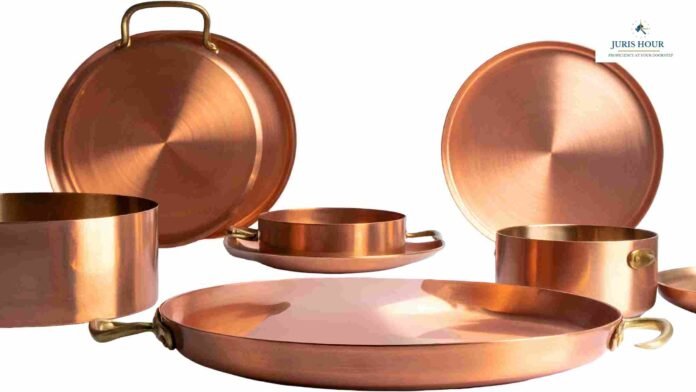
Purchasing copper utensils means acquiring finished consumer products, not standardized metal formats. The value of these utensils depends on factors beyond copper content, including craftsmanship, design, brand and usability. Unlike bullion, which is traded based on standardized purity and weight, utensils are sold at prices determined by retail demand and value added by manufacturing.
This lack of standardisation makes copper utensils poor substitutes for investible metal assets. They are not traceable to a reliable price mechanism reflective of pure copper value, complicating both valuation and resale.
Practical Limitations of Copper Utensils as an Investment
Copper utensils present several practical limitations as an investment vehicle. Liquidity is a major constraint: selling utensils as an investment requires finding buyers who are willing to pay based on metal content, rather than utility, often resulting in steep discounts. Storage is another concern, as copper is bulky relative to its metal value and subject to oxidation and corrosion unless maintained properly.
Unlike precious metals, there is no recognised secondary market or exchange for trading copper utensils at transparent prices. This results in significant uncertainty over fair valuation and timing of entry and exit from such an investment.
GST Implications on Purchase of Copper Utensils
Copper utensils attract Goods and Services Tax (GST) at a rate of 12 percent in India. This tax is non-recoverable for individual purchasers and directly increases the cost of acquisition. When compared with financial investments such as ETFs or mutual funds, which do not carry embedded indirect taxes at the point of buy or sell, the GST on copper utensils diminishes their attractiveness as an investment.
An investor in copper utensils effectively starts with a higher cost base, which requires a correspondingly higher rise in underlying metal value to compensate for the embedded tax.
Income Tax Treatment on Sale of Copper Utensils
Under the Income Tax Act, items held for personal use, including household utensils, generally do not qualify as capital assets. Jurisprudence confirms that gains on sale of personal effects are exempt from capital gains tax. Based on this, gains from the sale of copper utensils used for personal household purposes could be exempt from capital gains.
However, the exemption depends on facts and circumstances. If an individual purchases large quantities with a primary intention to sell for profit, tax authorities may treat such holdings as business or investment assets. This could lead to taxation either under capital gains provisions or as business income, depending on scale, intent and documentation. Given this ambiguity, the tax treatment of copper utensils remains less certain than regulated financial products.
Alternative Ways to Gain Copper Exposure
Investors seeking exposure to copper without the inefficiencies of physical utensils have several alternatives. One option is investing in international copper ETFs through the Liberalised Remittance Scheme. These ETFs track global copper prices or copper mining companies and provide direct exposure to price movements. From an Indian tax perspective, gains from foreign ETFs are generally taxed as capital gains, with long-term capital gains taxed at preferential rates when held beyond the prescribed holding period.
Another route is trading copper futures on the Multi Commodity Exchange (MCX). This provides direct exposure to commodity price movements. However, gains from futures contracts are treated as business income and taxed at applicable slab rates. Futures trading involves leverage and higher risk, making it suitable mainly for experienced investors.
Copper-related equities and metal sector ETFs offer indirect exposure through stock market instruments. These investments benefit from clearer regulatory and tax frameworks and can capture metal price movements with less operational complexity.
Comparative Assessment
In comparison to gold and silver, copper utensils are a highly inefficient investment vehicle. Gold benefits from mature market infrastructure, tax-efficient instruments such as Sovereign Gold Bonds and deep liquidity. Silver, while less developed than gold, still enjoys recognised ETF structures and active trading mechanisms. Copper utensils, by contrast, lack standardisation, transparent pricing and liquidity, rendering them poor substitutes for financial exposure to copper prices.
Strategic Guidance for Investors
For those seeking exposure to copper price movements, physical copper utensils are not an efficient or reliable choice. Instead, investors should consider internationally listed copper ETFs, copper futures (for suitable risk profiles), or copper-linked equities. Physical copper utensils are better viewed as household items with residual value, rather than as investment substitutes.
Conclusion
While copper’s fundamental demand drivers remain strong, investing in copper utensils as an interim asset until a dedicated copper ETF is launched in India is not advisable. The lack of liquidity, embedded GST costs, unstandardised pricing and uncertain tax treatment outweigh potential benefits. In contrast, gold and silver demonstrate how institutionalised market structures and clear tax frameworks can make metal investing practical and efficient.
Until a regulated copper ETF is introduced in India, investors seeking exposure to copper should utilize financial instruments that offer transparency, liquidity and defined tax treatment. Physical copper utensils should remain in the realm of consumption rather than investment.

