
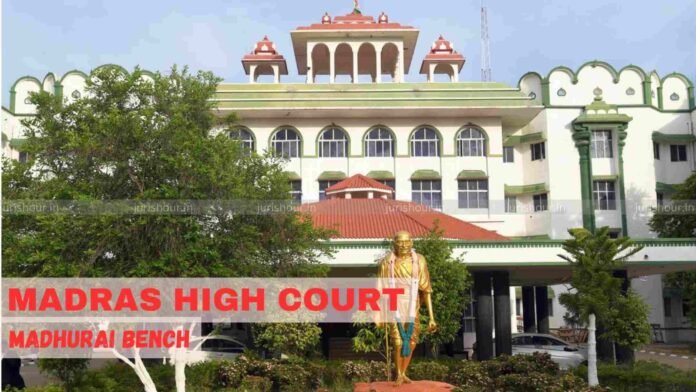
The Madurai Bench of the Madras High Court has ruled that the reaction to alleged hate speech cannot itself be criminalised; finds no ingredients of Sections 153, 153A or 505 Indian Penal Code (IPC).
The Bench of Justice S. Srimathy,has quashed the First Information Report (FIR) registered against BJP IT Cell National President Amit Malviya in connection with his social media post reacting to a speech made by Tamil Nadu Minister Udhayanidhi Stalin at a “Sanathana Abolition Conference” held in September 2023
The bench while allowing the criminal original petition filed under Section 482 of the Code of Criminal Procedure, held that the continuation of criminal proceedings against Malviya would amount to an abuse of the process of law, as the essential ingredients of the alleged offences under Sections 153, 153A and 505(1)(b) of the Indian Penal Code were not made out.
The FIR arose from a speech delivered by Minister Udhayanidhi Stalin on September 2, 2023, in which he stated that certain things “cannot merely be opposed but must be eradicated,” drawing an analogy between diseases such as dengue and coronavirus and what he described as “Sanathana Dharma.” Following this speech, Amit Malviya shared a video clip of the address on his ‘X’ (formerly Twitter) handle, questioning whether the minister’s remarks amounted to a call for the “eradication” of followers of Sanathana Dharma.
A complaint was subsequently lodged by a DMK functionary, alleging that Malviya had distorted the minister’s speech and deliberately provoked enmity between communities by suggesting that the remarks amounted to a call for genocide. Acting on this complaint, the police registered an FIR invoking Sections 153 (provocation with intent to cause riot), 153A (promoting enmity between groups), and 505(1)(b) (statements conducing to public mischief) IPC.
A central issue before the Court was the interpretation of the Tamil word “Ozhippu”, used by the minister, which translates to “abolition” or “eradication.” The Court undertook a detailed linguistic and legal analysis, observing that the term “abolish” carries meanings such as “eradicate,” “eliminate,” and “wipe out.”
The court reasoned that when such language is applied to a belief system followed by a large section of the population, it could reasonably be perceived as targeting the people who follow it. The Court went so far as to observe that the phrase “Sanathana Ozhippu” could be understood as implying cultural destruction or “culturicide,” and, in extreme interpretation, even genocide.
Importantly, the Court noted that in earlier writ proceedings challenging the minister’s continuation in office, another Bench of the High Court had already held that the impugned speech amounted to hate speech against Hindus, describing it as disinformation directed at a specific community.
Against this backdrop, the Court held that Malviya’s post was a reaction to an allegedly hateful speech and not an independent act intended to promote enmity. The judge emphasised that Malviya had merely questioned the implications of the minister’s remarks and had not called for violence, agitation, or disorder.
Rejecting the State’s argument that Malviya’s post instigated the majority community against minorities, the Court observed that accepting such reasoning would equally mean that the minister’s speech instigated minorities against the majority, a conclusion the prosecution itself did not pursue.
Relying on Supreme Court precedents including Bilal Ahmed Kaloo v. State of Andhra Pradesh and Patricia Mukhim v. State of Meghalaya, the Court reiterated that mens rea—the intention to promote hatred or public disorder—is a sine qua non for offences under Sections 153A and 505 IPC.
The Court found that Malviya’s post did not target two identifiable religious or social groups, nor did it demonstrate an intention to incite violence or disturb public tranquillity. Instead, it amounted to political criticism and questioning of a minister’s public speech, which falls within the realm of protected expression.
The Court expressed concern over the investigating officer’s counter affidavit, which contained politically charged statements questioning why the minister could not speak about Sanathana Dharma if others could. Justice Srimathy remarked that police officials are expected to remain apolitical and that such submissions were “reprehensible.”
The Court also recorded its dismay that while persons reacting to alleged hate speech are swiftly prosecuted, those who initiate such speech are often left untouched by the law.
Case Details
Case Title: Amit Malviya Versus State
Case No.: CRL OP(MD)No.17575 of 2023
Date: 20.01.2026
Counsel For Petitioner: N Anantha Padmanabhan Senior Counsel
Counsel For Respondent: M.Ajmal Khan
Read More: SC’s Mohit Minerals Ruling Applies Retrospectively: Calcutta HC Quashes IGST Demand on Ocean Freight

