
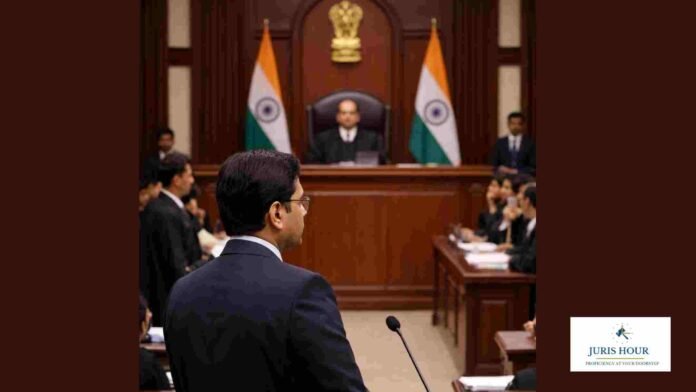
The Delhi High Court has notified the “Personal Appearance of Government Officials in Court Proceedings Rules, 2025”.
The rules have been framed under Section 7 of the Delhi High Court Act, 1966, read with Article 227 of the Constitution of India, and in compliance with the Supreme Court’s judgment dated January 3, 2024, in the State of Uttar Pradesh & Ors. vs Association of Retired Supreme Court and High Court Judges at Allahabad & Ors..
Applicability Across Courts and Tribunals
The newly notified framework applies to all court proceedings involving the government before the Delhi High Court, as well as district courts and tribunals functioning under its supervisory jurisdiction. It also governs proceedings relating to contempt of court.
Three Categories of Proceedings Identified
The rules classify court proceedings into three broad categories.
The first involves evidence-based adjudication, where documentary or oral evidence is required and personal presence of officials may be necessary for testimony or production of records.
The second category covers summary proceedings, which rely primarily on affidavits, documents, or reports.
The third consists of non-adversarial proceedings, where the presence of officials may be required to explain complex policy or technical matters not adequately addressed by government law officers.
Importantly, the High Court has clarified that except in evidence-based matters, physical presence of government officials should not be ordered as a routine measure if issues can be resolved through affidavits and documents.
Safeguards Before Directing Personal Appearance
The rules mandate that before directing personal appearance, courts should first consider allowing officials to appear via video conferencing. Any direction for physical presence must be accompanied by recorded reasons explaining why such appearance is necessary. Adequate advance notice must also be provided to enable officials to prepare and assist the court effectively.
Courtroom Conduct and Dignity Emphasised
The notification lays down detailed procedural safeguards for situations where officials are personally present in court. Courts are advised to assign specific time slots for such matters and ensure that officials are not required to stand throughout the hearing.
Oral remarks that may humiliate officials are to be avoided, and courts must refrain from commenting on their physical appearance, educational background, or social standing. The emphasis is on fostering an environment of respect and professionalism during judicial proceedings.
Reasonable Timelines for Compliance with Judicial Orders
Recognising the complexity of governance and policy decision-making, the rules require courts to consider administrative realities before fixing timelines for compliance with judicial orders. Courts are encouraged to grant reasonable timeframes and may revise compliance deadlines upon request from the government, after due consideration.
Cautious Approach in Contempt Proceedings
The rules also lay down safeguards in contempt and enforcement proceedings. Courts are urged to exercise restraint and ordinarily issue a notice seeking an explanation before directing personal appearance for alleged willful disobedience. Even in contempt matters, video conferencing is to be treated as the first option, with physical appearance directed only where necessary and after giving sufficient notice.
Notification Details
Date: 26th December, 2025
Read More: Income Tax Weekly Flashback: 28 December 2025 To 03 Jan 2026

