
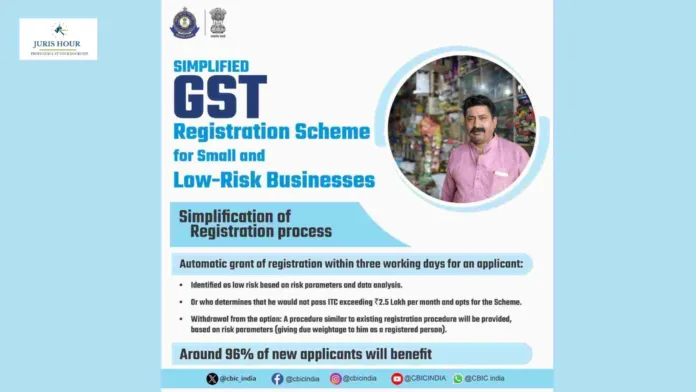
In a move aimed at easing the compliance burden for entrepreneurs, the Central Board of Indirect Taxes and Customs (CBIC) has introduced a Simplified GST Registration Scheme tailored for small and low-risk businesses. The initiative promises faster processing, reduced documentation, and wider accessibility for new applicants.
According to CBIC, the new scheme will ensure automatic grant of GST registration within three working days for eligible applicants, provided they meet the prescribed low-risk parameters. This marks a significant shift from the earlier system where manual verification often delayed approvals.
Key Features of the Scheme
- Eligibility Based on Risk Parameters: Applicants identified as low-risk through risk assessment and data analysis will qualify for automatic registration.
- Input Tax Credit (ITC) Threshold: Businesses that determine their ITC claim will not exceed ₹2.5 lakh per month can opt into the scheme for simplified registration.
- Opt-Out Option: If required, applicants can withdraw from the simplified scheme and shift to the existing registration process, ensuring flexibility for businesses with varying compliance needs.
Benefits for Small Businesses
Officials estimate that around 96% of new GST applicants will benefit from this initiative. The scheme is expected to particularly help small shopkeepers, service providers, and startups by cutting down on red tape and ensuring quicker integration into the GST framework.
“This is a big relief for micro and small businesses. Faster registration means they can focus on growing their trade without unnecessary delays,” a CBIC spokesperson said.
Industry Reactions
Tax experts have welcomed the scheme, calling it a “progressive step” towards encouraging entrepreneurship. “The biggest advantage is predictability. Businesses can now plan operations with certainty about registration timelines,” said a Delhi-based GST consultant.
Small traders, especially in semi-urban and rural areas, are also likely to find the process less intimidating, as the emphasis on risk-based assessment reduces unnecessary scrutiny for genuine applicants.
Government’s Larger Push for Ease of Doing Business
The introduction of the simplified registration scheme aligns with the government’s broader goal of reducing compliance costs and enhancing the ease of doing business in India. The automatic registration feature echoes global best practices in digital tax administration and ensures greater efficiency in GST operations.
As the country aims to expand its tax base while supporting small businesses, this scheme could prove to be a game-changer in bridging the gap between formal and informal sectors of the economy.
Read More: 56th GST Council Meet: GSTAT Will Accept Appeal Before Sept. End, Commence Hearing Before December

