
Ask Jurishour AI

Generic selectors
Exact matches only
Search in title
Search in content
Post Type Selectors
tdb_templates
saswp_reviews
saswp-collections
saswp_rvs_location
tdc-review-email
web-story-font
web-story
googlesitekit_email
tds_locker
tds_email
saswp
mailpoet_page
mailpoet_email
tdcpt_tunes
tdc-review
pronamic_payment
pronamic_gateway
pronamic_pay_subscr
wpcode
HomeNotificationGSTAT Announces New Dress Code For Technical and Judicial Members

GSTAT Announces New Dress Code For Technical and Judicial Members

Published on

🚀 Stay Connected With JurisHour

WhatsApp X Telegram

The Principal Bench of the GST Appellate Tribunal (GSTAT), New Delhi, has issued a formal dress code for its Members, marking a significant step toward standardising courtroom decorum. The move comes after it was noted that the GSTAT Procedural Rules 2025 are silent on the matter of prescribed attire.

The directive, issued under Office Order No. 114/2025 and signed by Registrar Saurav Suman Shardool, has been passed with the approval of the Hon’ble President and is effective immediately.

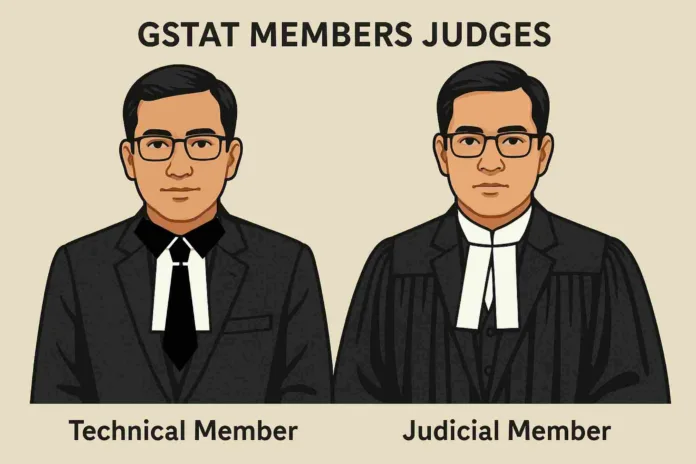
According to the order, Judicial Members and the Hon’ble President are required to wear attire prescribed for Judges of the Hon’ble Supreme Court or High Courts, but without the gown. This ensures judicial uniformity while also introducing a slight relaxation in formality.

For Technical Members, a distinct and detailed dress code has been laid down. Male Technical Members must wear either white, striped, or black trousers, paired with a black coat over a white shirt, along with a black necktie or a buttoned-up black coat. Female Technical Members are instructed to wear a black overcoat over a saree that is either black, white, or lightly printed. Furthermore, any Technical Member wearing a turban must ensure that it is either white or light in colour.

The order also effectively prohibits casual or informal attire in court proceedings. Brightly coloured or heavily printed sarees for female members are not permitted under the new code. Likewise, turbans in vibrant or dark shades are not allowed. Judicial Members are not required to wear gowns, deviating slightly from the traditional full court dress seen in other judicial forums.

By introducing this dress code, the GSTAT aims to bring consistency and a professional appearance in line with other judicial and quasi-judicial bodies in India. The directive emphasizes that this dress code is to be observed with immediate effect.

Mariya Paliwala
Mariya Paliwalahttps://www.jurishour.in/
Mariya is the Senior Editor at Juris Hour. She has 7+ years of experience on covering tax litigation stories from the Supreme Court, High Courts and various tribunals including CESTAT, ITAT, NCLAT, NCLT, etc. Mariya graduated from MLSU Law College, Udaipur (Raj.) with B.A.LL.B. and also holds an LL.M. She started her career as a freelance tax reporter in the leading online legal news companies.

Latest articles

Negative Blocking of Electronic Credit Ledger Permissible for GST Recovery U/s 79: Madras High Court

The Madras High Court has held that the GST authorities may resort to negative...

GST ITC Rejection on Property Constructed for Leasing Can’t Ignore Supreme Court’s Safari Retreats Ruling: Madras High Court

The Madras High Court has set aside assessment orders rejecting input tax credit (ITC)...

CBIC Reviews JNCH Preparedness for 100% Non-Intrusive Inspection of Import Containers

The Central Board of Indirect Taxes and Customs (CBIC) has reviewed the preparedness of...

WHEN WELFARE TAKES A BACK SEAT: INTERIM CHILD CUSTODY, COMITY AND STEREOTYPICAL NOTIONS OF MATRIMONY

The Article “WHEN WELFARE TAKES A BACK SEAT: INTERIM CHILD CUSTODY, COMITY AND STEREOTYPICAL...

More like this

Negative Blocking of Electronic Credit Ledger Permissible for GST Recovery U/s 79: Madras High Court

The Madras High Court has held that the GST authorities may resort to negative...

GST ITC Rejection on Property Constructed for Leasing Can’t Ignore Supreme Court’s Safari Retreats Ruling: Madras High Court

The Madras High Court has set aside assessment orders rejecting input tax credit (ITC)...

CBIC Reviews JNCH Preparedness for 100% Non-Intrusive Inspection of Import Containers

The Central Board of Indirect Taxes and Customs (CBIC) has reviewed the preparedness of...